

Recording Emotions Helps You Know Yourself
A 15-week study of 25 pre-service school counselors reveals how AI emotion journaling transforms self-awareness and empathy
Recording Emotions Helps You Know Yourself
Can we truly help others without understanding ourselves?
For students pursuing careers as school counselors, one of the most critical competencies is self-awareness. You can only empathize with a student’s emotions when you understand your own feelings deeply. Yet in demanding graduate programs, structured tools for self-reflection are rarely provided.
What Happened Over 15 Weeks?
Researcher Seo-Yun Choi from Sookmyung Women’s University conducted a study from September to December 2024 with 25 pre-service school counselors. Participants used AI emotion journaling (seamspace) weekly for 15 weeks.
The method was beautifully simple:
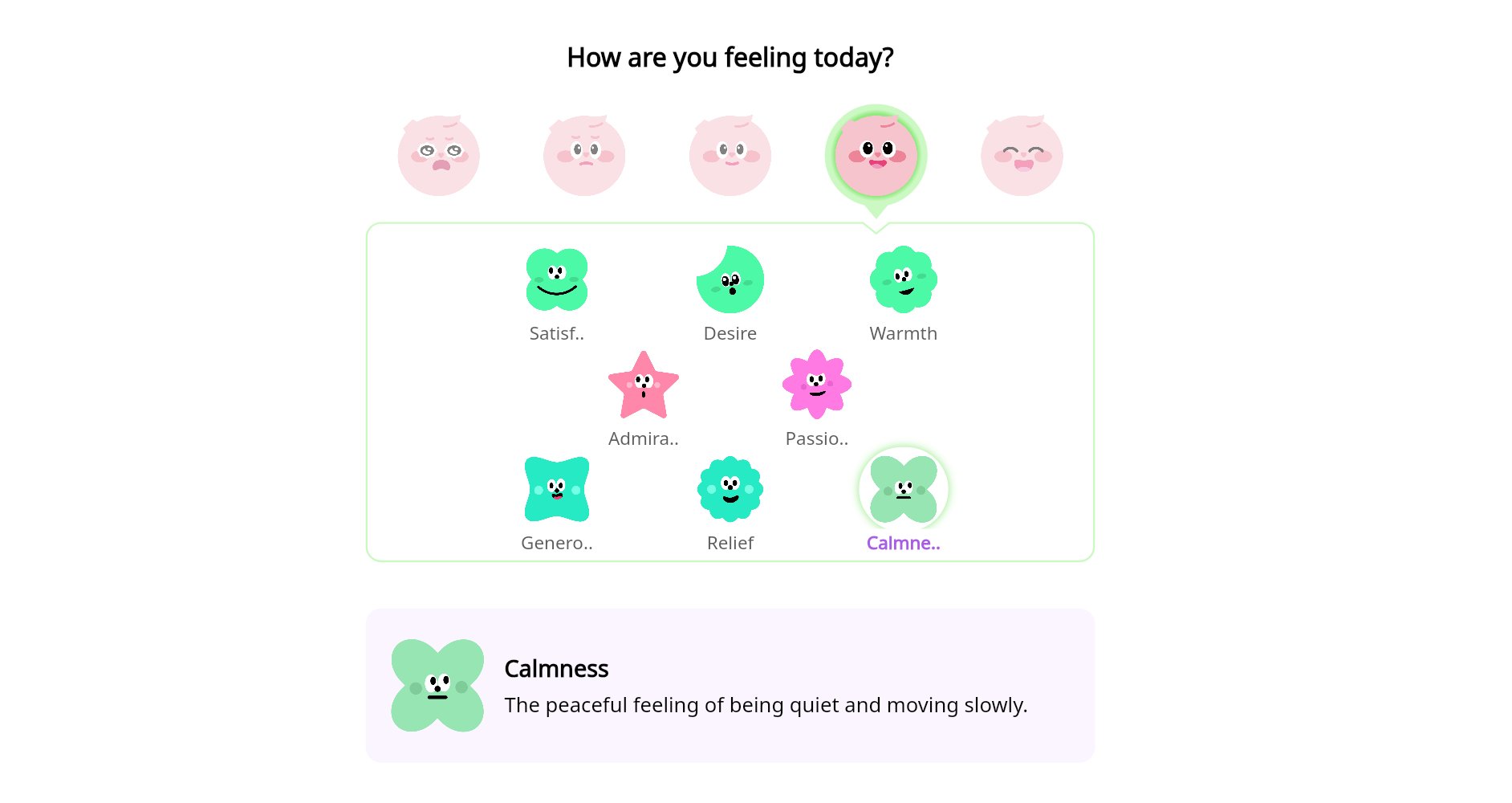
- Select your current emotion from 46 emotion words
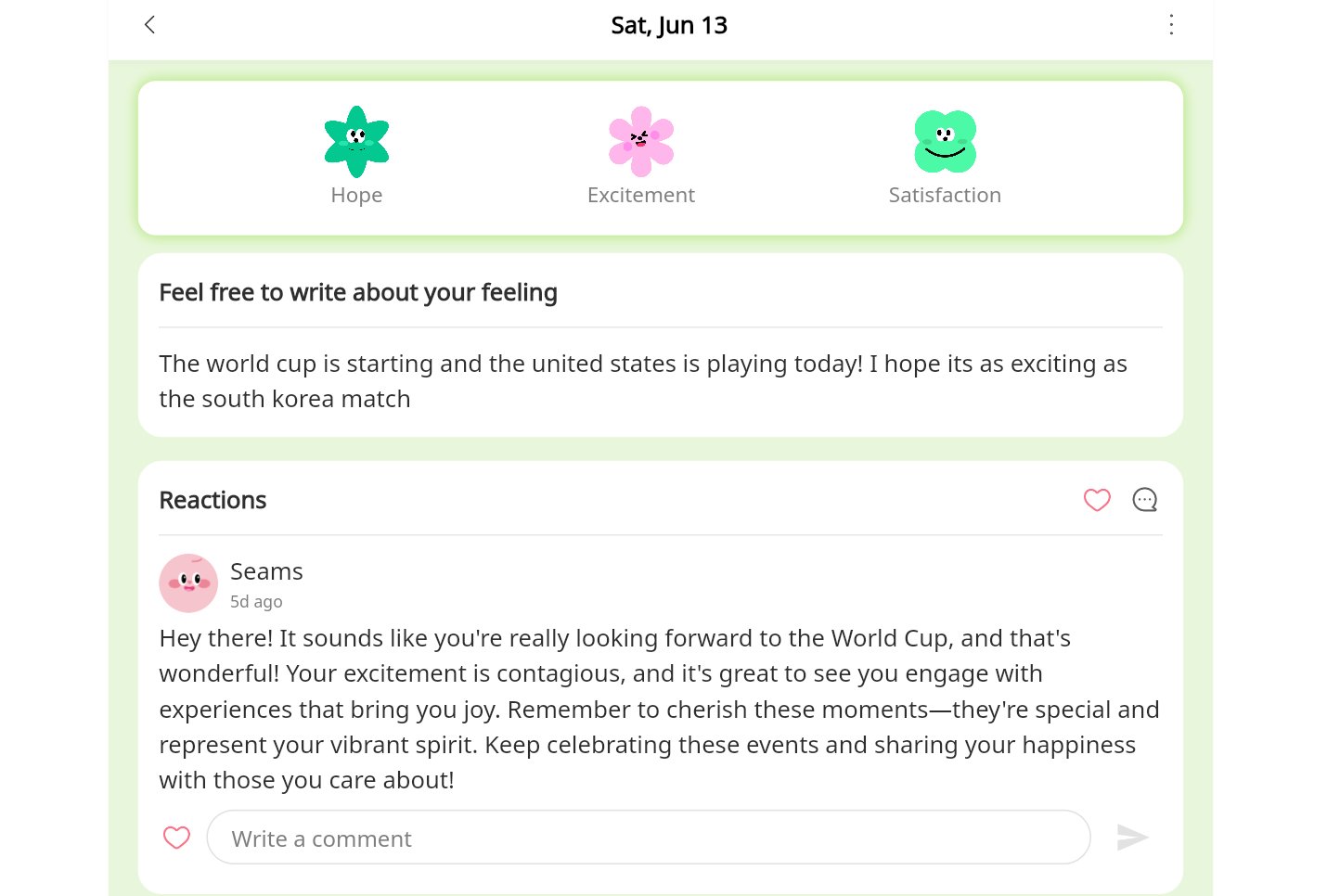
- Write a reflective journal entry freely
- Receive feedback from AI character Seams
Change Confirmed Through Voice, Not Numbers
This qualitative research analyzed participants’ own words, revealing genuine transformation:
“Before, I would just say ‘I was angry.’ Now I can write ‘I felt disappointed.’ I was amazed at how specifically I could express myself.” — Participant 20
“Writing became the time I took care of my emotions. I didn’t know this was self-care too.” — Participant 25
“Understanding myself helps me feel like I can empathize better with my future clients.” — Participant 3
Four Changes the Research Confirmed
1. Expansion of Emotional Vocabulary
From “angry” to “disappointed,” “wronged,” and “frustrated” — the language for expressing emotions became more sophisticated and nuanced.
2. Acceptance of Negative Emotions
Instead of suppressing feelings, participants developed the ability to acknowledge emotions as they are. This is a cornerstone of empathic capacity.
3. Self-Growth Experience
Cognitive reframing, deepened self-understanding, and self-care habits were formed through consistent practice.
4. Formation of Counselor Identity
Participants began asking themselves: “What kind of counselor do I want to become?”
Honest Feedback About AI Support
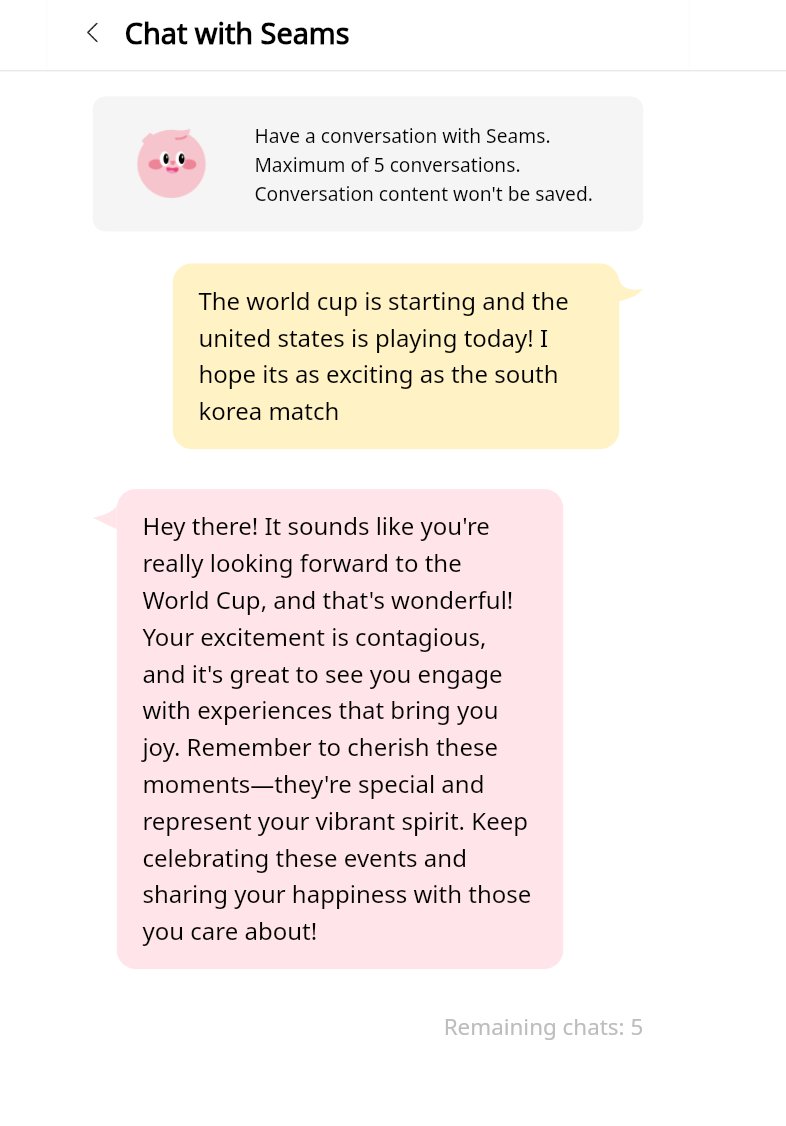
Participants praised the immediacy of AI feedback and its non-judgmental responses. They also honestly noted limitations: responses sometimes felt mechanical, and conversations were capped at 5 turns per session.
This candid feedback shows seamspace the path forward for continuous improvement.
Final Thoughts
Recording emotions isn’t merely diary-writing. It’s the starting point for understanding yourself and, through that understanding, connecting with others. This research demonstrates that AI can meaningfully accompany us on this journey of self-discovery.
Source: Choi, S. Y. (2025). Reflective writing of pre-service school counselors using AI emotion diary app. Journal of Education and Culture, 31(2), 389–414.