

Emotions Have Coordinates
Discover how the Mood Meter reveals two dimensions of emotions, and why Seamspace uses 46 emotional words to deepen self-understanding.
The Limits of “How Are You Feeling?”
When someone asks “How are you feeling?” most of us respond the same way:
“Good.” “Not great.” “Just okay.”
But can these three answers really capture our emotional state?
Researchers at Yale Center for Emotional Intelligence (YCEI) took this question seriously and developed the Mood Meter—a scientific framework for understanding emotions beyond simple categories. It’s not just about sorting feelings; it’s about understanding them precisely.
Emotions Exist on Two Axes
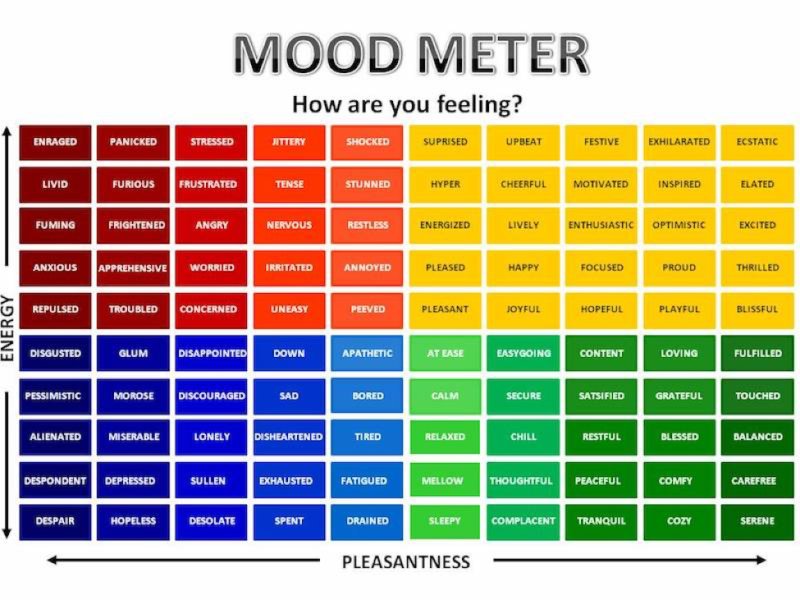
The Mood Meter organizes emotions along two key dimensions:
- Energy — How activated are your body and mind?
- Pleasantness — How positive or enjoyable is this feeling?
Where these axes intersect, four distinct emotional zones emerge:
| Zone | Color | State | Examples |
|---|---|---|---|
| High Energy + High Pleasantness | Yellow | Energized | Joy, Excitement, Happiness |
| Low Energy + High Pleasantness | Green | Peaceful | Calm, Grateful, Content |
| High Energy + Low Pleasantness | Red | Activated | Angry, Anxious, Tense |
| Low Energy + Low Pleasantness | Blue | Low | Sad, Tired, Hopeless |
When you say “just okay,” you’re actually located somewhere specific on this map.
Why Naming Emotions Precisely Matters
YCEI researcher Marc Brackett calls this emotional granularity—the ability to distinguish between similar but distinct emotions.
‘Angry’ and ‘disappointed’ are not the same. ‘Anxious’ and ‘tense’ are different states.
People who can name their emotions with greater precision:
- Manage their emotions more effectively
- Make better decisions under stress
- Show greater empathy toward others
This goes beyond simple emotional expression—it’s the foundation of real Social-Emotional Learning (SEL).
Why Seamspace Offers 46 Emotions
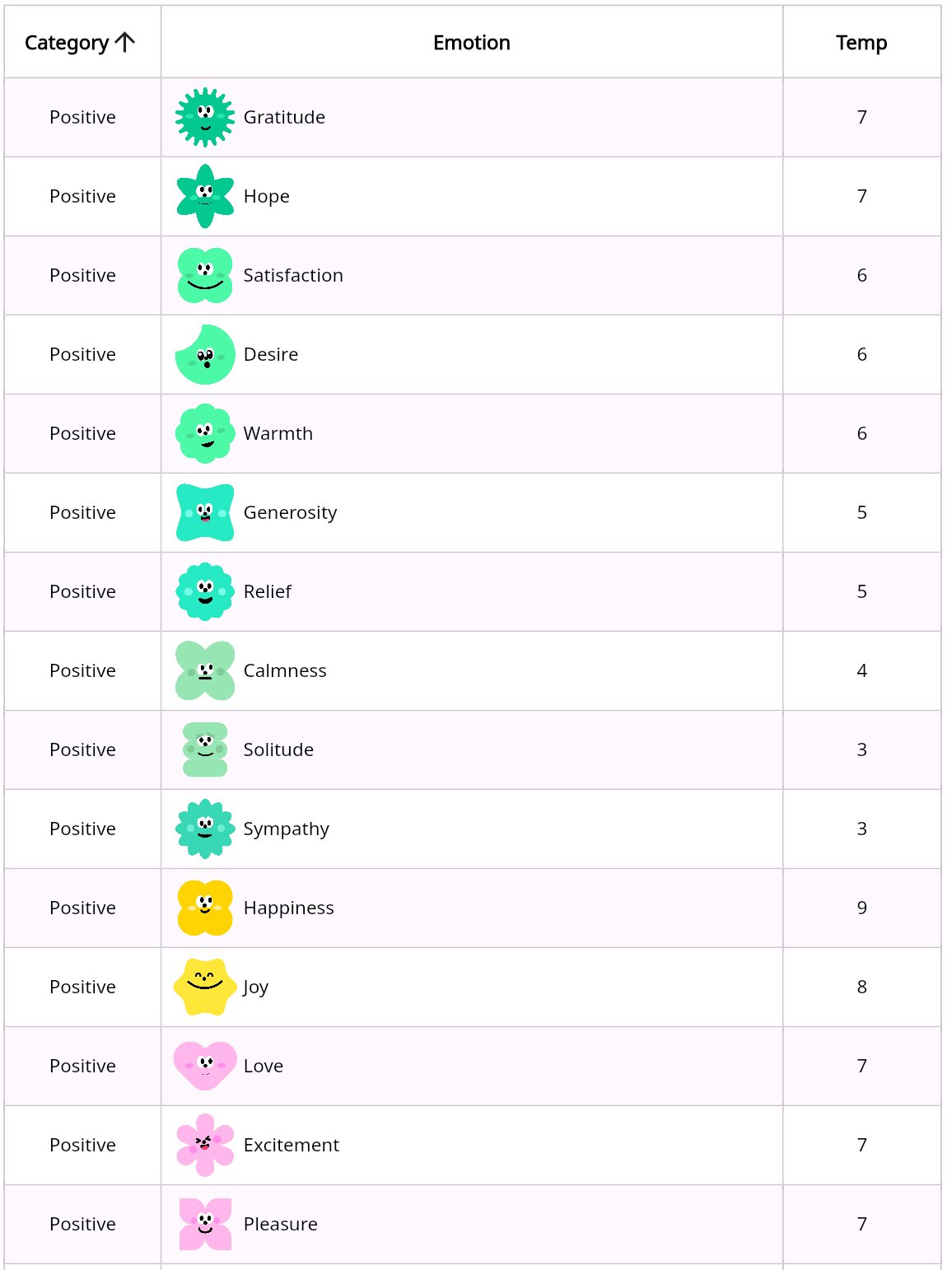
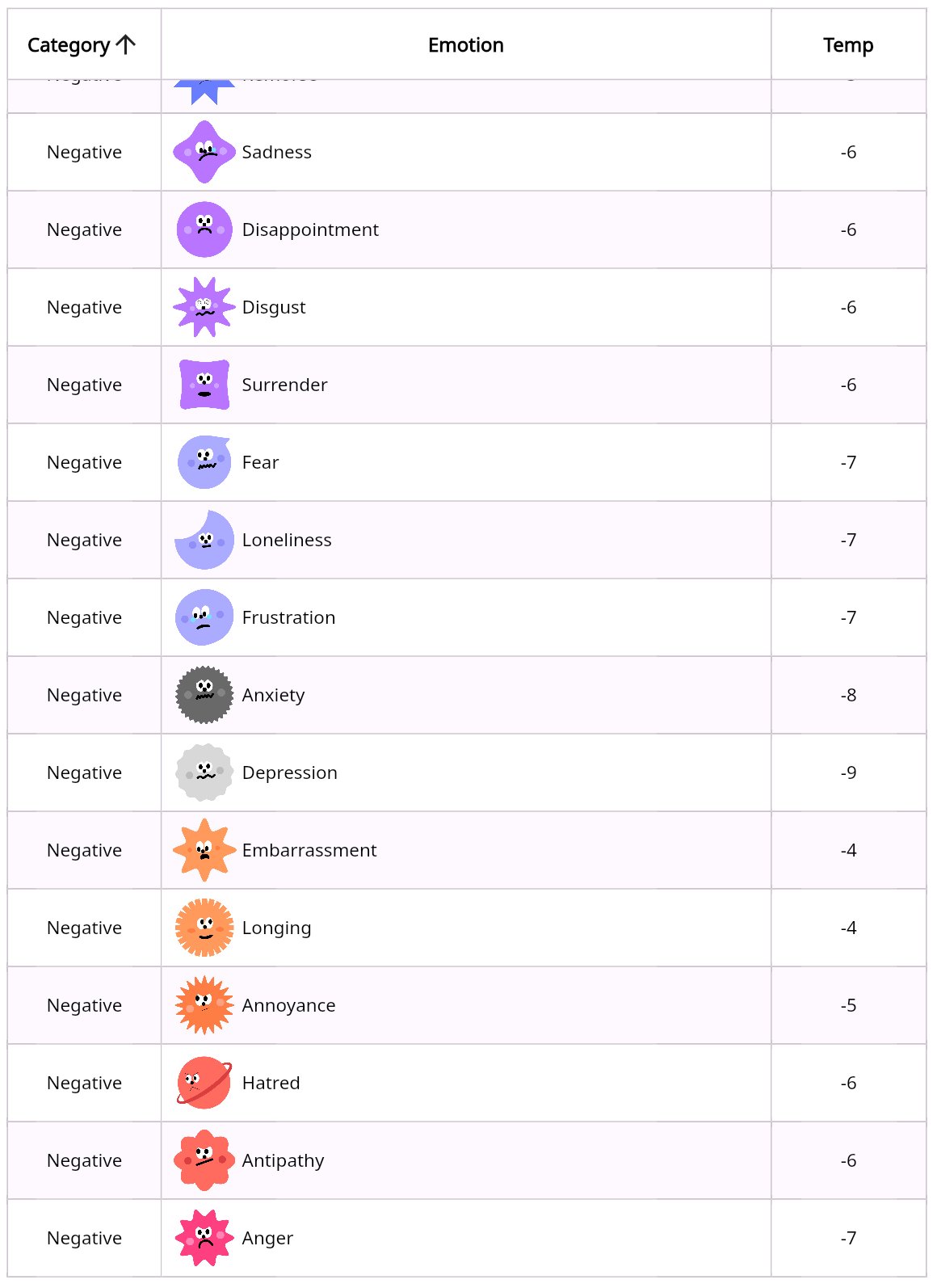
Seamspace’s emotional classification system is built on the Mood Meter’s two-dimensional framework. We’ve mapped 46 emotional words across the energy and pleasantness axes.
Instead of saying “I’m having a bad day,” a student selects from 46 precise emotional options:
‘Drained,’ ‘Disappointed,’ ‘Overwhelmed,’ ‘Unmotivated’—each one represents a different state requiring different support.
Once an emotion is selected, analysis happens instantly. Teachers see their entire class’s emotional distribution at a glance, and AI delivers personalized feedback to each student.
What the Research Shows
Multiple studies share a common finding: as emotional vocabulary becomes more sophisticated, self-understanding deepens.
In one study, participants who learned emotional granularity could distinguish between “angry” and “disappointed” after just 15 weeks. In another, students who practiced emotional specificity through daily gratitude journaling showed significant improvements in peer relationships and school satisfaction.
The better you understand your emotional coordinates, the better your quality of life becomes.
The Takeaway
The Mood Meter tells us something powerful: emotions are measurable, and emotional literacy can be learned. Seamspace brings this insight into the classroom every single day.
Knowing where your emotions are positioned right now—that’s how self-understanding begins.