

Why LBTI began with the record of everyday life
A behind-the-scenes look at why seamspace chose daily patterns over one-time self-report tests when thinking about personality and self-understanding.
How well do we really know ourselves?
When people want to understand themselves, they often turn to personality tests. Among them, 16-type personality tests have become especially familiar. A short set of questions produces a type, and the explanation often feels surprisingly accurate.
Still, one question remains: how accurately does that result really represent who we are?
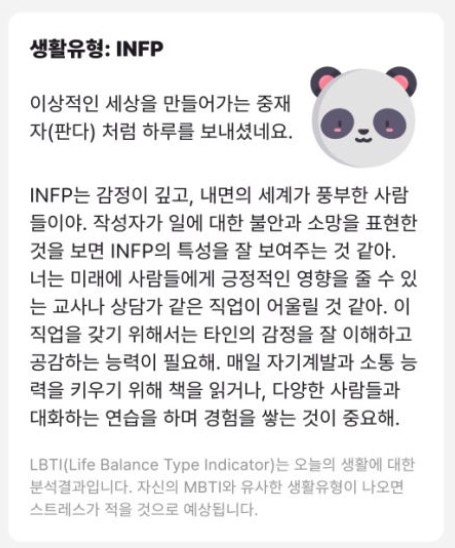
This question becomes even more important when we think about children. If a child around ten years old is still in the middle of learning how to understand themselves, how stable can a self-report personality result really be? The answers may change depending on the child’s mood that day, how they interpreted the question, or even how they wanted to be seen.
That is why seamspace started thinking in a different direction. Maybe personality is revealed less by a single set of answers, and more by the repeated shape of everyday life.
Some people consistently notice social dynamics before anything else. Some react more strongly to novelty. Some become especially unsettled when the day moves away from what they expected. These patterns often become clearer not through one survey, but through the accumulation of daily records.
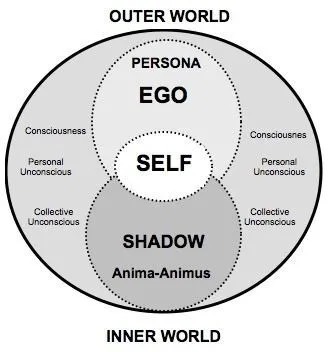
This is where LBTI began. Instead of looking at personality only through the lens of how I describe myself, we wanted to explore it through how I actually live, day after day.
When daily records accumulate, a personal baseline begins to appear. And once that baseline is visible, days that fall far from it begin to stand out too. On some days, a person may be far more sensitive than usual. On others, more withdrawn, more tired, or less like themselves. Those days may not simply be “bad days.” They may be days that felt especially hard because they were out of sync with one’s usual pattern.
This perspective matters. Instead of treating personality as a fixed label, it allows us to see both the patterns that consistently belong to someone and the temporary fluctuations that shape a particular day.
There is another important question here as well. Sometimes we feel that other people see us more objectively than we see ourselves. In some relationships, others may notice our habits and reactions more clearly than we do. At the same time, we may still be the person who best understands the reasons behind our inner feelings. So what is the “real” self?
At seamspace, we do not think the answer lives in only one place. The way I see myself, the way others see me, and the way I have actually lived each contain a different kind of truth. LBTI is an attempt to read one of those truths—the truth inside the record itself. Something more steady than a single answer, and sometimes more honest than a self-description.
We did not build LBTI to reduce people to a type. If anything, we built it to move away from overly simple conclusions like “this is just the kind of person I am.” Through repeated daily records, we want to understand something softer and more layered: in what situations does a certain side of me appear more often?
That is why LBTI is closer to observation than testing. It looks less at a one-time choice and more at repeated ways of living. It reads not only self-declared identity, but also the trace of an actual day. And through that process, we begin to distinguish between the self we know well, the self we are becoming, and the self that sometimes feels unfamiliar.
In the end, LBTI is not simply asking, “What type of person are you?”
It is asking a slightly longer, gentler question: “What kinds of days have you been living, again and again?”
At seamspace, we believe that is where real self-understanding begins.